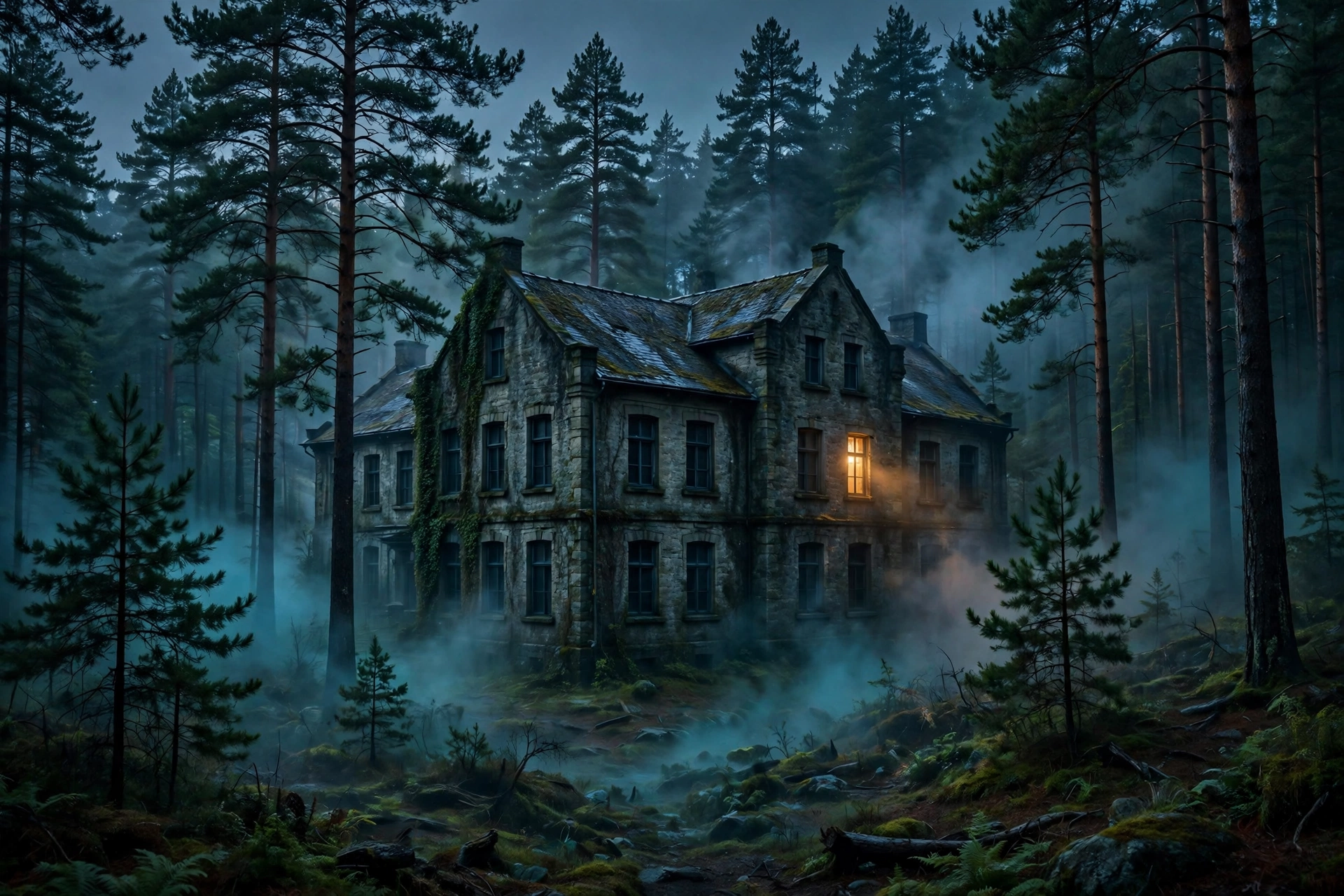
Wayward Ending Explained: What the Finale Really Means
Spoiler warning: this article discusses the ending of Wayward in full, including the final scenes. If you haven’t finished the series, stop here and come back once you have.
Few Netflix finales in 2025 left viewers sitting in silence quite like Wayward. Mae Martin’s eight-episode limited series ends not with a clean rescue but with choices that are sadder and more unsettling than any twist. If you finished episode 8 wondering what you just saw, here is the Wayward ending explained — what happens, and what it means.
The Premise: What Wayward Is About
Wayward is set in the fictional Vermont town of Tall Pines in 2003. At its centre is Tall Pines Academy, a boarding school for “troubled teens” run by Evelyn Wade (Toni Collette), a charismatic founder whose methods look less like rehabilitation the closer you get. Students who are favoured undergo “the Leap,” a ritualised, drug-assisted form of hypnotherapy meant to cut them off emotionally from their parents and their pasts.
Into this closed world comes Alex Dempsey (Mae Martin), a police officer who has just moved to town with his pregnant partner Laura (Sarah Gadon) — herself a graduate of the Academy, and once Evelyn’s protégée. As Alex starts asking questions about missing and mistreated students, two current students, best friends Abbie (Sydney Topliffe) and Leila (Alyvia Alyn Lind), are planning an escape. Everything that follows builds toward one question: once a place like Tall Pines gets inside your head, can you actually leave?
What Happens in the Finale
The finale pulls several threads tight at once. Alex, who has been quietly helping Abbie, gives her stamps that become the key to her escape plan: Abbie uses a fake love letter to lure a guard away from his post, gets the school’s power cut at the crucial moment, and slips out in a crowd of students wearing identical hoodies, so the guards can’t pick her out. Leila gets out with her — and then, at the edge of freedom, turns back. She tells Abbie the school can help her, and stays.
Meanwhile, Evelyn confronts Alex in the Academy’s basement, and the confrontation turns violent. Rabbit, Evelyn’s most devoted disciple, finally turns on her mentor, and Alex injects Evelyn with the drug she has been using on her students — a dose Rabbit warns may be too much. Drugged, Evelyn reveals a buried truth to Alex: Laura’s parents were not killed by someone else. Laura killed them herself, as a teenager, under the influence of her own Leap. Rabbit then guides the incapacitated Evelyn through a warped version of the Leap itself, and what we see of Evelyn dissolves into a surreal vision of doors and memory. The series never confirms whether she survives.
As all this unfolds, Laura goes into labour early and gives birth at home. When Alex reaches her, community members gather and pass the newborn around, skin to skin, as Laura explains that the child should belong to everyone — the only way, she believes, to break the pattern.
Then comes the scene many viewers had to rewind. Alex appears to drive out of Tall Pines with the baby and Abbie — the escape he promised. It isn’t real. The show cuts to the truth: Alex, back at home, quietly closing his front door, choosing to stay with Laura and the child inside the community she is now set to lead. The final image belongs to Abbie, driving away alone. Free — but alone.
What the Ending Really Means
The cycle doesn’t break — it changes hands
The most chilling idea in the finale is that defeating Evelyn changes almost nothing. Evelyn once replaced the Academy’s original leader; now Laura, her former victim, steps into the same role, promising a gentler version of the same control. Laura’s plan to raise children collectively, starting with her own baby, is presented in the language of healing — which is exactly how Evelyn’s regime always justified itself. The system survives because it doesn’t depend on one villain. It depends on believers.
Alex’s choice: the ending’s real subject
The fake-out escape is the finale’s boldest move, and creator Mae Martin has been clear about what it means: Alex can picture the right thing to do — he literally fantasises it — and still doesn’t do it. Martin has described this as a kind of moral failure driven by love, fear and the desire for a conventional family life. Alex isn’t tricked into staying. He chooses the safety of belonging over the danger of leaving. That’s why the closing of the front door lands harder than any plot twist.
Abbie and Leila: two answers to the same place
The friends’ split is the emotional core of the ending. Abbie’s escape is the only clean break in the series, and it costs her everything familiar. Leila’s decision to stay is not written as weakness or simple brainwashing. She has no real safety net waiting outside — a point Martin has made in interviews — and Tall Pines offers her something she’s never had: the feeling of being wanted. The finale argues that places like this don’t hold people with locks. They hold them with belonging.
Found family, real and counterfeit
The community’s ritual with the newborn is a grotesque mirror of something genuinely human — the wish to raise a child surrounded by care. Against it sits the small, real bond between Abbie and Alex, which makes his failure to act on it hurt more. The show’s question isn’t whether people need a family. It’s what they’re willing to surrender to have one.
Questions the Finale Leaves Unanswered
- Is Evelyn dead? The overdose is strongly implied to be dangerous, but her fate is never shown on screen. Her final scenes blur into a Leap-like vision, leaving her survival ambiguous.
- Where does Abbie go? She drives out of Tall Pines with no destination, no money and no support network established. Her freedom is real; her future is unwritten.
- What becomes of Leila? As Laura’s regime takes shape, Leila looks set to become to Laura what Laura once was to Evelyn — the favoured disciple. Whether she ever sees it that way is left open.
- Will Alex ever leave? The ending gives no sign of a plan, only a door closing. The baby’s upbringing inside the community is the story’s darkest loose end.
Will There Be a Wayward Season 2?
Probably not — and that appears to be by design. Wayward was made and released as a limited series, and Martin has described it as a self-contained, one-season story, even while acknowledging in interviews that the characters are left in crisis, with more that could be explored. Netflix has not announced a second season. The open edges of the finale read less like a cliffhanger and more like a deliberate statement: systems like Tall Pines don’t end neatly, so neither does the show.
If it is truly the end, it’s a fitting one. Wayward closes with one girl driving toward an unknown future, a town quietly re-forming around a new leader, and a man who saw everything clearly — and stayed anyway. The door out of Tall Pines was open. Almost nobody walked through it.